MANIFESTO
People Beyond Commodities is a position, not a tagline. Behind every commodity there are people, a place and a way of working. The food trade treats them as interchangeable lines on a price list, and that is where quality, trust and resilience are lost. Keeping that human chain visible is also the more reliable way to do business.
01
Prevention over reaction
Supply chains fail in silence, months before the problem surfaces. The work is to stay close enough, early enough, that nothing breaks. Every assignment starts with one question: what must be watched so that nothing has to be repaired?
02
A facility is read, not visited
What matters is in the details: the state of the line, the habits of the people, the gap between the paperwork and the floor. Reading them takes food technology applied to sourcing.
03
One side of the table
No commissions, no success fees, no hidden margin. Advice is independent only when whoever gives it gains nothing from the outcome.
04
What is built for a client belongs to the client
Supply chains developed for one company are never resold to its competitors. Contacts are not a catalogue.
05
People before commodities
Behind every product are producers, families and decades of craft. Relationships survive bad harvests, price shocks and market cycles. Price lists don’t.
WHO I AM
The distance between a certification document and the reality of a production facility is where most supply chain problems are born. I have spent my working life in that gap.
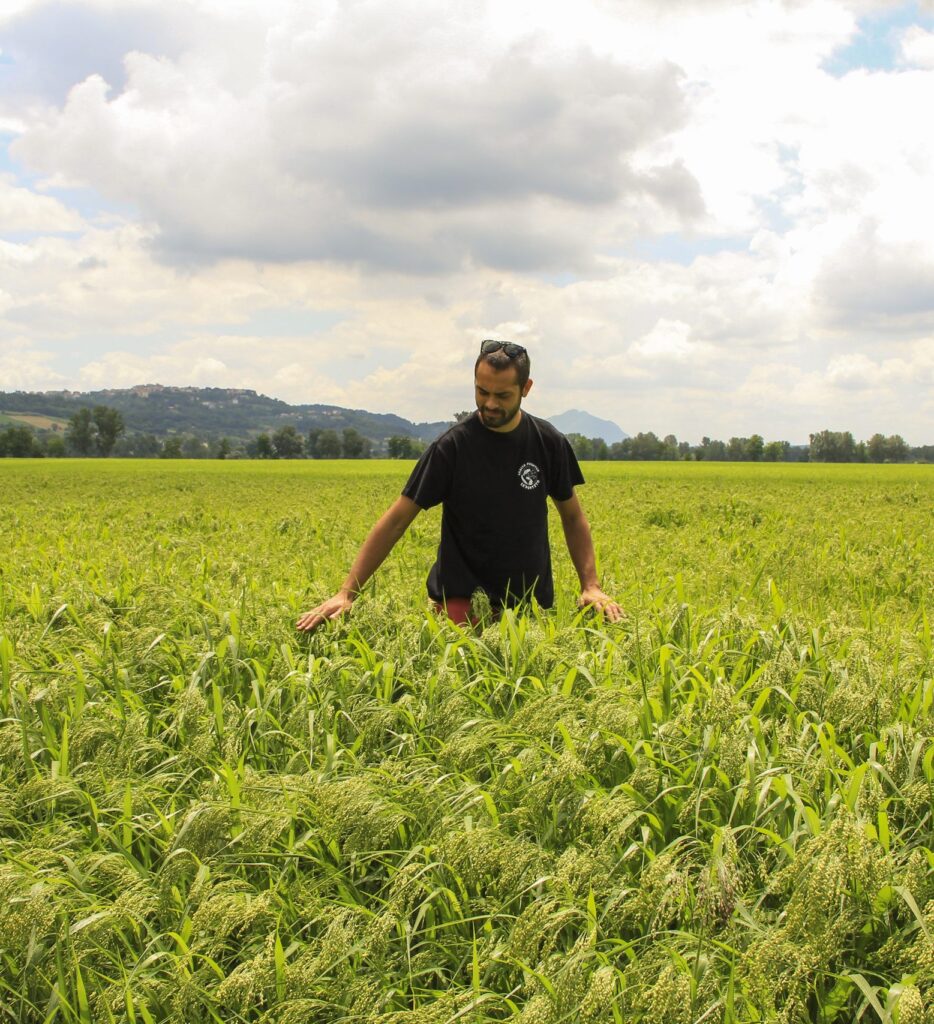
I am Matteo Tinelli, a food technologist based in Umbria, central Italy. For more than fifteen years I have built and overseen food supply chains and led projects in Italy and at origin, for companies that need to know what actually happens at the producer.
I trained at the University of Perugia, then kept going — a Permaculture Design Certificate, courses in organic farming, studies in biodynamic agriculture — each one another lens for reading a farm, a supply chain, an ecosystem.
The real school was running supply chain and operations for BMS, a private-label organic dry-food manufacturer. I built and managed a direct network of 200+ producers and suppliers across Italy and international origins, and structured the entire farm-to-facility flow: crop planning, quality control, storage, processing. Where infrastructure held things back, I fixed it — years of project work left better systems, better processes, new certifications.
A seat on the board of Gino Girolomoni Cooperativa Agricola — one of the founding names of Italian organic food — gave me direct exposure to governance, strategic decision-making, and the long-view thinking that only comes from being in the room where those decisions are made.
HOW I WORK
Supply chains are built on trust long before they are built on contracts
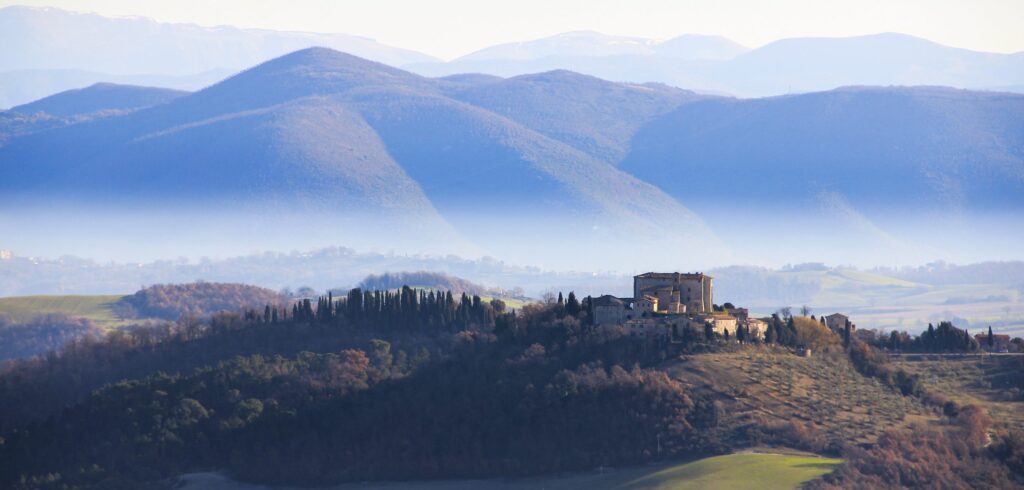
I don’t wait for things to break. Give me a mandate and I become a standing presence over your supply chain: I monitor the suppliers, study everything around them — agronomy, origin, post-harvest handling, processing, the market and regulatory context — and go to the field to see in person what a document can never tell you. The point is to see risk forming and act before it becomes a cost.
When a problem is already there, I act in person. If a shipment is blocked, I go. If a supplier goes silent, I call — in their language. If there is a quality failure, I run the root-cause analysis inside the facility, not in a spreadsheet. Part action, part oversight.
When something needs to be built, I build it. A process line, a warehouse, a new origin. I design it around how the raw material actually behaves, then lead it until it runs — coordinating the engineers, contractors and producers, and standing on the floor at the steps where projects usually go wrong.
I work in systems, not transactions. Soil, agronomy, handling, processing, certification and market requirements are one connected chain, and the weakest link decides the outcome. I am useful to clients who see it that way — who want a partner watching the whole chain, not just the piece they are worried about today.
I say what I think. I will tell you when a supplier is not ready, when a product brief is unrealistic for the market, or when an import channel hides structural risk the price-per-kilo conveniently ignores. I don’t build consensus for its own sake — I build accurate assessments, and then help you act on them.